There are very few experiences in life that stop you dead in your tracks, not out of fear, but out of pure, overwhelming awe. Gorilla trekking is one of them.
The moment you push through the last curtain of wet undergrowth and a mountain gorilla lifts its ancient, dark eyes to meet yours—something shifts inside you permanently. You are no longer just a tourist passing through Africa. You are a witness to something profound, something that has existed long before you and will, with enough care, exist long after.
But getting to that moment takes planning. The right permit. The right season. The right lodge. And the right mindset.
This is your complete guide to gorilla trekking, built for the traveler who wants to do it properly, from the first Google search to the last muddy step back out of the forest.
What Is Gorilla Trekking?
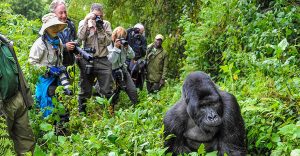
Gorilla trekking is the guided activity of hiking into a protected forest to find and observe a habituated family of wild mountain gorillas in their natural habitat. The word “habituated” is key here. It means the gorilla family has been slowly, carefully introduced to human presence over several years. They don’t run, they don’t feel threatened, and they go about their day while you watch, stunned, from a respectful distance of seven meters.
Each session lasts one hour with the gorillas. That single hour earned through a sweaty, sometimes steep, always memorable hike is consistently ranked among the most powerful wildlife experiences on earth.
Mountain gorillas (Gorilla beringei beringei) are critically endangered. There are roughly 1,000 left in the world, and nearly half of them live in Uganda’s Bwindi Impenetrable National Park, a UNESCO World Heritage Site that has stood for over 25,000 years. The other population lives in the Virunga Massif, shared between Rwanda, the Democratic Republic of Congo, and Uganda’s Mgahinga Gorilla National Park.
When you go gorilla trekking, you’re not just ticking a bucket list item. You’re directly funding the conservation of a species on the edge.
The Best Time to Go Gorilla Trekking in Uganda
You can go gorilla trekking in Uganda year-round. But there are seasons that make the trek more comfortable and seasons that will test your waterproofing.
The dry seasons — June to August and December to February — are widely considered the best times to visit. Trails are less muddy, visibility in the forest is better, and the overall physical demand of the trek is lower. These months fill up fast, so permits and accommodation need to be booked months in advance.
The wet seasons — March to May and September to November — bring heavy rain, muddy trails, and leeches. But they also bring something else: lush, impossibly green forests; fewer crowds; and a sense of having the whole primeval wilderness to yourself. Many seasoned trekkers actually prefer this time. If you’re fit, prepared, and don’t mind wet boots, the wet season is underrated.
No matter when you go, mornings in Bwindi are cool, often cold. Come prepared for temperature swings, because by mid-morning, once you’re deep in the forest and moving, you’ll be warm.
Getting Your Gorilla Permit
This is the most important logistical step in your whole trip. Without a permit, you are not entering that forest.
Gorilla permits in Uganda cost $800 per person for foreign non-residents, $700 for foreign residents of East Africa, and $250 for Ugandan and East African citizens. Each permit covers one hour with one specific gorilla family on one specific date.
Permits are issued through the Uganda Wildlife Authority (UWA) and can be booked directly or through a licensed tour operator. Booking through an operator is strongly recommended, as they handle logistics, assign you to a gorilla family close to your accommodation (crucial, some families are far from others), and can help with rescheduling if something goes wrong.
Permits sell out, especially in the dry season. Book at least 3 to 6 months in advance for peak months.
Choosing the Right Sector: Why Rushaga Is Special
Bwindi is divided into four trekking sectors: Buhoma, Ruhija, Nkuringo, and Rushaga. Each has its own character, gorilla families, and accommodation options.
Rushaga in the south is the most gorilla-rich sector in the entire park. It hosts the largest number of habituated gorilla families, including the Nshongi, Mishaya, Kahungye, Busingye, and Bweza groups. It is also the only sector in Bwindi that offers the gorilla habituation experience; he extended it to a four-hour encounter for those who want to go deeper.
Rushaga is accessible from Kisoro town, and for travelers coming from Rwanda, it’s actually closer to Kigali than to Kampala, making it a natural choice for those combining both countries.
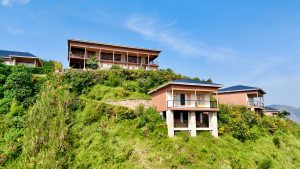
Nestled right on the edge of this remarkable sector, Burunga Gorilla Lodge sits perched on a ridge overlooking the endless emerald canopy of Bwindi and the rolling hills of Kisoro. Just 15 minutes from the Rushaga starting point, it’s one of the most ideally positioned lodges in the region, close enough for easy early-morning transfers and far enough to feel like a private sanctuary above the forest.
What to Pack for Gorilla Trekking
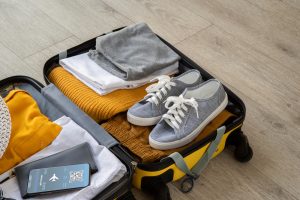
Getting this wrong doesn’t just make you uncomfortable — it can ruin the trek. Here’s what you actually need:
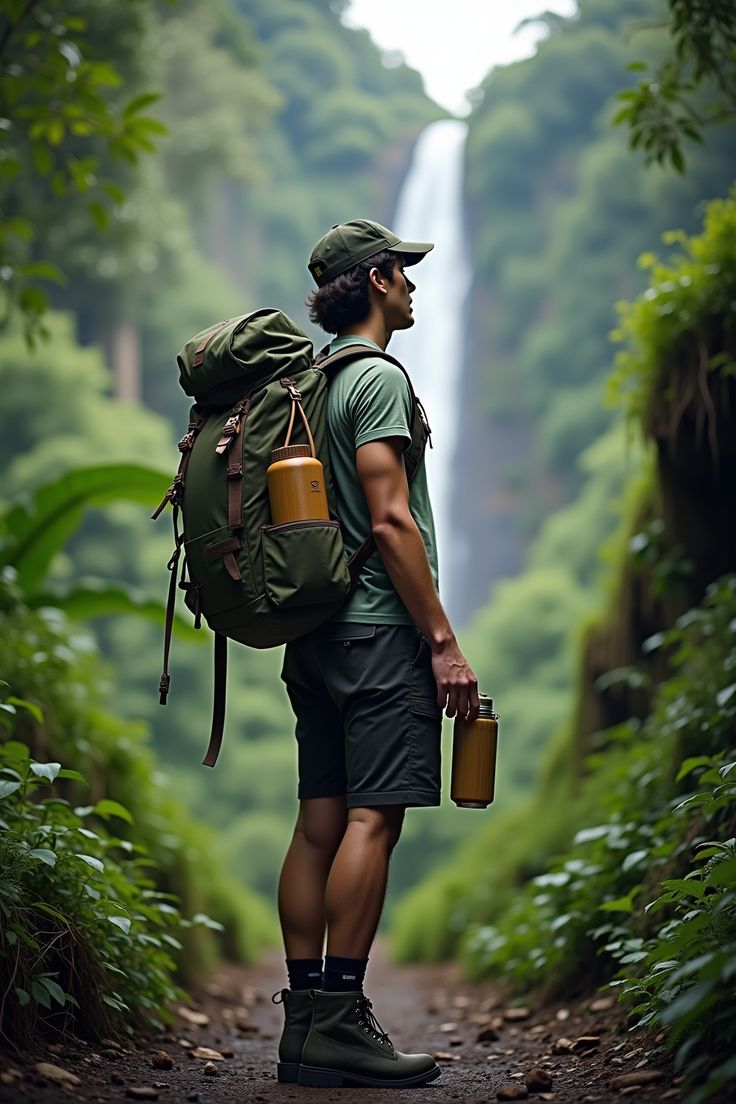
- Waterproof hiking boots with ankle support are non-negotiable on steep, slippery trails
- Long-sleeved shirts and trousers protect against nettles, insects, and the cold
- Rain jacket or poncho: the forest creates its own weather
- Gardening gloves for grabbing vegetation on steep sections
- Neutral-coloured clothing; avoid bright colours or camouflage patterns
- Insect repellent should be applied before you enter the forest
- Small backpack to carry water, snacks, camera, and a change of shirt
- Walking stick: many lodges and operators provide these; use them
- Camera with flash photography around gorillas is strictly prohibited
- Patience and a quiet voice, seriously, this is gear
Leave the big suitcase at the lodge. Travel light into the forest.
What to Expect on the Day
You’ll start with a 7:30–8:00 AM briefing at the sector’s park headquarters. Rangers will explain the rules: a seven-meter distance from the gorillas, no eating or drinking in front of them, masks worn if you have any respiratory illness, no flash photography, and quiet movement.
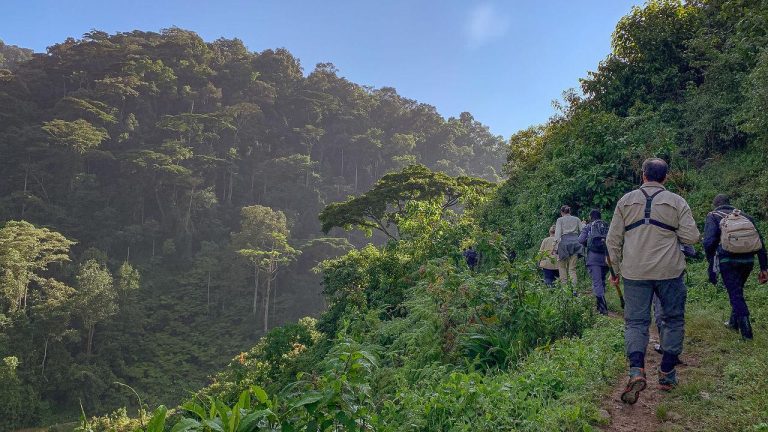
Then the hike begins. Depending on where the gorilla family is that morning, and gorillas move constantly, the trek could take 30 minutes or four hours. The average is one to two hours in. This uncertainty is part of the magic. The forest doesn’t perform on a schedule.
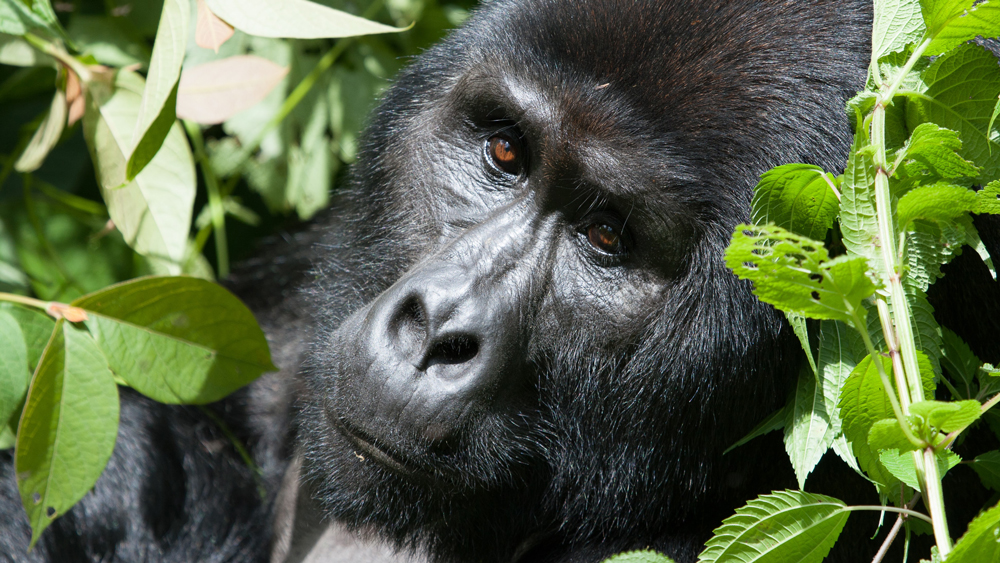
When you find them, and you will, the hour passes in about six minutes, subjectively. You will see them feeding, grooming each other, playing, nursing babies, and occasionally staring directly at you with an intelligence that is profoundly familiar. Silverbacks can weigh up to 220 kilograms. Up close, they are extraordinary. Many people cry. Don’t be surprised if you do too.
Where to Stay: Make Your Base Count
The lodge you choose shapes the entire experience, not just the sleeping. An early morning start means you don’t want to be an hour’s drive from the briefing point. You also want somewhere that feels worth coming back to after a physical day in the forest, a hot shower, a warm meal, a fire, and a view that reminds you where you are.
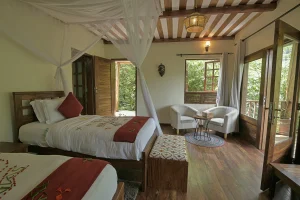
At Burunga Gorilla Lodge, guests return from the trek to eco-luxury cottages set high above the forest, with wooden balconies facing the Bwindi canopy. Meals are made from locally sourced ingredients. The staff, genuinely among the warmest in the region, will wash the mud off your boots before you’ve even thought to ask.
Beyond the gorillas, the lodge offers Batwa cultural tours, bird-watching walks through one of Africa’s most biodiverse forests, and canoe rides on the glassy surface of Lake Bunyonyi, Uganda’s most beautiful lake.
Final Word: Go. And Go Prepared.
Gorilla trekking is one of the few travel experiences that fully delivers on its promise. No one comes back disappointed. But the quality of that experience, how rested you feel, how close to the sector you’re staying, and how well you planned make the difference between a good story and a life-changing one.
Book your permit early. Choose your sector wisely. Pack your waterproof boots. And when that silverback finally turns to look at you, just breathe.
You earned this.
Ready to plan your gorilla trekking adventure? Burunga Gorilla Lodge sits at the gateway to the Rushaga Sector, just 15 minutes from the trailhead. Contact us to book your stay and let our team help you secure permits, plan activities, and make every moment count.
FAQ
What is gorilla trekking?
Gorilla trekking is a guided hike into a protected forest to observe wild mountain gorillas in their natural habitat. Each group visit lasts one hour.
How much does a gorilla permit cost in Uganda?
A gorilla trekking permit in Uganda costs $800 USD per person for foreign non-residents (2025–2026 rates).
When is the best time to go gorilla trekking in Uganda?
The dry seasons (June–August and December–February) offer the easiest trekking conditions. However, gorilla trekking is possible year-round.
How long does gorilla trekking take?
The full day runs from 7:30 AM. The hike to find the gorillas takes between 30 minutes and 4 hours; time with the gorillas is one hour.
Which sector of Bwindi is best for gorilla trekking?
The Rushaga Sector hosts the most habituated gorilla families in Bwindi and is the only sector offering the Gorilla Habituation Experience.